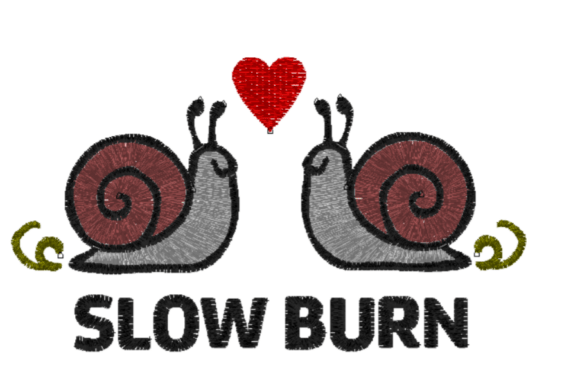
Slow Burn Embroidery Design Review
As an embroidery designer who has spent years translating digital concepts into tangible, stitched assets for small businesses, I approach every new design file with a specific lens. It is not just about whether the image looks pretty on a screen; it is about how it performs in production, how it holds up after fifty wash cycles, and whether it elevates the brand identity of the client wearing or using it. Today, I am reviewing Slow Burn, a Valentine’s Day themed embroidery design featuring two snails facing each other with heart trails. This piece is described as cozy and charming, but does that translate to commercial viability? Let’s break down its potential for branded patches, apparel accents, and small business merchandise.
First Impressions: The Visual Personality of Slow Burn
The title "Slow Burn" suggests patience, warmth, and gradual development—qualities that resonate deeply with the handmade community and boutique brands. Visually, the concept of two snails meeting with heart trails immediately evokes a sense of whimsy and intimacy. In the world of embroidery, this design feels less like a bold, corporate logo and more like a friendly, approachable accent. It leans heavily into the rustic, playful, and elegant categories simultaneously. For a small café, a local bakery, or a creative studio, this aesthetic signals that the brand values connection, care, and a slower pace of life.
However, from a technical standpoint, "cozy and charming" can sometimes mask complexity. Snail shells often require intricate stitching to avoid looking muddy, and heart trails demand smooth satin stitches or carefully placed fill stitches to maintain their shape. If executed well, Slow Burn will feel premium and thoughtful. If rushed, it risks looking cluttered. The first impression is undeniably strong for niche markets, particularly those targeting gift-givers, couples, or customers who appreciate artisanal quality over mass-produced uniformity.
Real-World Business Applications
Where does Slow Burn truly shine in a commercial setting? Its versatility makes it an excellent candidate for several key product categories. For staff uniforms in a cozy coffee shop or a floral boutique, this design works beautifully as a chest logo accent. It is subtle enough not to overpower a work shirt but distinct enough to spark conversation with customers. Similarly, for apron embroidery, the design adds a layer of personality to what is otherwise a functional garment, turning a simple kitchen tool into a branded asset.
In the realm of accessories, Slow Burn is perfect for cap embroidery. The curved surface of a baseball cap or beanie complements the organic, flowing lines of the snail trails. It also serves as an ideal mark for tote bag designs, where the larger canvas area allows the detail of the shells to breathe. For Etsy sellers and craft business assets, this design is a goldmine for creating customer gifts or limited-edition holiday merch. Imagine a small batch of embroidered patches sold alongside handmade candles or jewelry; the thematic consistency strengthens the overall brand narrative.
Furthermore, consider its use in product packaging accents. A small, high-quality embroidered patch featuring Slow Burn attached to a thank-you card or a product tag can significantly increase perceived value. It transforms a standard transaction into a memorable unboxing experience. For event merch, such as a wedding favor or a Valentine’s Day pop-up market stall, the design offers a ready-made visual hook that aligns perfectly with the occasion without being overly cliché.
Strategic Placement and Cautionary Zones
While the design is charming, there are specific areas where it requires careful consideration. Small patch sizes pose a significant risk. If you attempt to digitize or stitch this design at a very small scale, the fine details of the snail faces and the delicate heart trails may merge into an indistinct blob. Always test the design at its intended final size before committing to production. Tiny lettering, if included, must be large enough to remain legible; otherwise, it detracts from the professionalism of the finished product.
Curved surfaces, such as the front of a cap or the sleeve of a jacket, present another challenge. The hoop size and fabric tension must be managed carefully to prevent distortion. If the design is too wide for the available hoop space, it may stretch, altering the proportions of the snails. Additionally, textured fabrics like heavy denim or thick fleece can obscure the finer stitches. On dark uniforms, thread color contrast becomes critical. You cannot rely on light-on-dark visibility alone; the thread colors must be chosen specifically to ensure the design pops against the background material.
Items that undergo frequent washing, such as daily-wear aprons or work shirts, also demand scrutiny. High stitch density can lead to puckering if the stabilizer is not appropriate for the fabric weight. Over time, excessive stitching can wear out, especially on frequently laundered items. Therefore, while Slow Burn is durable, its longevity depends entirely on proper construction techniques during the digitizing and sewing phases.
Impact on Brand Identity and Customer Trust
Using a design like Slow Burn sends a clear message about your brand identity. It communicates that you are attentive to detail, empathetic to your customers' emotions, and committed to quality. In a market saturated with generic logos, a unique, hand-crafted feel helps build recognition and trust. Customers associate the effort put into a custom embroidered patch with the effort put into the product itself. This visual consistency reinforces professionalism and enhances buyer engagement.
When a customer sees a well-executed embroidered patch on a tote bag or a cap, they perceive higher value. It suggests that the brand cares about the tactile experience of its products. This is particularly important for handmade products and boutique merchandise, where the story behind the item is as valuable as the item itself. By integrating Slow Burn into your design assets, you are not just adding decoration; you are building a cohesive visual language that resonates with your target audience.
Practical Notes for the Embroidery Designer
Before incorporating Slow Burn into any commercial project, follow these essential steps to ensure success:
- Test in Black and White: Convert the design to monochrome to check the balance and spacing of elements. This reveals if certain areas are too dense or too sparse.
- Check Small Scale Legibility: View the design at 50% scale to simulate how it will look on a small patch or a distant viewer.
- Review Thread Color Contrast: Ensure the selected thread colors provide sufficient contrast against the intended fabric texture. Avoid colors that blend too closely with the background unless a tonal effect is specifically desired.
- Inspect Spacing and Hoop Size: Confirm that the design fits within your standard hoop size and that there is adequate negative space around the edges to prevent trimming errors.
- Test on Real Fabric: Never assume a design will work based on a digital mockup alone. Stitch it out on the actual fabric type you plan to use, including the correct stabilizer.
- Create a Printable Mockup: Use a realistic mockup to present the design to clients or for marketing purposes. This helps visualize the finished product in context.
- Compare Against Other Assets: Place Slow Burn next to your other brand logos to ensure visual harmony and consistency across all touchpoints.
- Confirm Commercial Licensing: Before selling any products featuring this design, verify the commercial license terms. Ensure you have the right to use the digital embroidery file for resale.
By following these guidelines, you can transform Slow Burn from a simple digital file into a powerful tool for brand building. Whether used for custom apparel, embroidered patches, or promotional giveaways, this design has the potential to add a touch of warmth and professionalism to your small business merch. Remember, the success of any machine embroidery design lies not just in its appearance, but in its execution and strategic application.